top of page
_edited.jpg)


Dr. Carl Johnson: The Public Health Official Who Challenged Rocky Flats
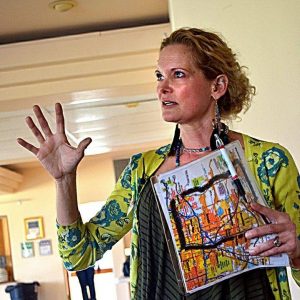
Dr. Carl Johnson was Jefferson County's public health director when he began investigating plutonium contamination and cancer around Rocky Flats. His controversial research reported higher cancer incidence in areas with greater measured contamination, and his work became entangled with development, property values and his removal from office. Decades after his death, Johnson is increasingly remembered as an important Rocky Flats whistleblower whose questions about public heal
Tiffany Hansen
Sep 177 min read


Why Rocky Flats Needs a Multidisciplinary Public Health Policy Review
Rocky Flats Downwinders is seeking independent researchers in epidemiology, biostatistics, environmental health, research methodology, health policy and public-health communication to evaluate both CDPHE's Rocky Flats cancer studies and how their findings have been communicated. The objective is not to predetermine whether Rocky Flats caused disease. It is to determine what the existing evidence can—and cannot—establish and ensure that Colorado communicates those distinctions
Tiffany Hansen
Sep 145 min read


Better Health Research for Rocky Flats: Study the People Who Were Actually There
Existing cancer-registry studies provide useful information about people diagnosed while living near Rocky Flats—but that is not the same as following the people who lived there during historically relevant periods. RFD is advocating for independent research that considers residential history, migration, latency, exposure-informed geography and long-term health outcomes.
Tiffany Hansen
Sep 126 min read


Rocky Flats Truth & Transparency: Asking the CDPHE to Be Clear About What Its Cancer Studies Can—and Cannot—Tell Us
Rocky Flats Downwinders is launching the Truth & Transparency Campaign to ask Colorado for clearer disclosure about what existing Rocky Flats cancer studies can—and cannot—tell us, greater data transparency, independent technical review, and research designed to address the health experiences of people who actually lived near Rocky Flats during historically relevant periods.
Tiffany Hansen
Sep 123 min read


What Does “No Elevated Cancer Rates” Near Rocky Flats Actually Mean?
CDPHE says decades of cancer monitoring have not found elevated rates among residents living near Rocky Flats. But who was actually studied: people present during potential exposure or people living nearby when diagnosed? Our exchange with Colorado’s cancer registry examines this critical distinction
Tiffany Hansen
Sep 106 min read


Looking Again at the Studies: Randy Stafford’s Review of Rocky Flats Health and Contamination Research
Randy Stafford spent months reviewing decades of Rocky Flats contamination and health studies for the Jefferson Parkway Advisory Committee. His 26-page analysis identified contradictions in study methods, risk models and conclusions—raising a larger question: what would it take to finally conduct the kind of health research Rocky Flats communities need?
Tiffany Hansen
Sep 86 min read


The Hidden Health Burden of Living With Chronic Environmental Contamination
A systematic review of 41 studies found that living with chronic environmental contamination can affect anxiety, stress, depression, and trauma symptoms. The research also shows that institutional dismissal of community concerns may deepen the harm.
Tiffany Hansen
Sep 76 min read


What Science Tells Us About the Health Impacts of Radiation Exposure
The Union of Concerned Scientists explains how ionizing radiation can affect the body immediately or contribute to illnesses that emerge years later. Learn why this research matters to communities connected to the nuclear-weapons life cycle, including Rocky Flats.
Tiffany Hansen
Sep 73 min read


The 903 Pad: Reconstructing a Major Plutonium Release from Rocky Flats
One of the most significant contamination events in Rocky Flats history did not begin with a fire or explosion. It began with drums of plutonium-contaminated waste oil stored outdoors. A 1996 study published in Health Physics reconstructed the release of plutonium from an area of the Rocky Flats Plant known as the 903 Pad. The research was conducted as part of a Colorado Department of Public Health and Environment effort to reconstruct historical contaminant releases and esti
Tiffany Hansen
Sep 33 min read


Plutonium Detected in Air Filters Near Rocky Flats as Boulder County Reconsiders Greenway Project
The discovery of Rocky Flats-derived plutonium in air-filter samples collected along Indiana Street has renewed concerns about plans to expand the Rocky Mountain Greenway trail system near the former nuclear weapons plant. The Rocky Mountain Greenway Project began in 2016 as an effort to connect three national wildlife refuges—Rocky Mountain Arsenal, Two Ponds and Rocky Flats—through a regional trail network. Plans include an underpass connecting the Rocky Flats National Wild
Tiffany Hansen
Aug 203 min read


Jefferson Parkway: A 2018 Position Paper on the Public Health Risk of Disturbing Soil Along Indiana Street
In 2012, LeRoy Moore and Robert Del Tredici published “Plutonium is forever,” an opinion piece raising concerns about residual plutonium contamination, the Jefferson Parkway and public recreation at Rocky Flats. More than a decade later, the article offers a historical perspective on questions about soil disturbance, public access and long-term stewardship that continue to surround Rocky Flats today.

Ross Davis
Aug 192 min read


Experts Urge Colorado Board of Health to Reexamine Public Health Risks at Rocky Flats
A 2024 joint submission to the Colorado State Board of Health calls for renewed scrutiny of Rocky Flats, including independent review, air monitoring, additional health research and greater public disclosure.
Tiffany Hansen
Nov 1, 20243 min read


Could Building the Jefferson Parkway Disturb Rocky Flats Contamination?
In a 2018 position paper, Jefferson Parkway Advisory Committee member Randy Stafford examined decades of soil studies, health research and historical records to argue that disturbing soil along Indiana Street could create additional public-health risks. His paper brings together important evidence—and competing interpretations—at the center of the Jefferson Parkway debate.
Tiffany Hansen
May 1, 20184 min read
bottom of page