_edited.jpg)
From Church Ranch to Candelas: Rocky Flats, a Contamination Lawsuit and a Complicated Development History
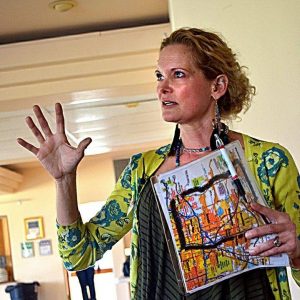

Decades before homes were built at Candelas, members of the Church-McKay family went to court over radioactive contamination of their property near Rocky Flats. Years later, Charles Church McKay became involved in developing Candelas ("Candelas" is the plural form of the Spanish word candela, which literally means candle, flame, or fire.) The history connects two chapters of Rocky Flats that are usually told separately.
Today, Candelas is a large residential community in northwest Arvada. But the history of the land surrounding Candelas reaches back long before the subdivision—and directly into the history of Rocky Flats.
The Church family was one of the major landowning families in the area before the federal government established the Rocky Flats nuclear weapons plant. Jefferson County's historical records describe Church Ranch as the largest cattle ranch in northern Jefferson County. At its height, the family's holdings included approximately 1,500 irrigated acres and 6,500 acres of pastureland on and near Rocky Flats.
Part of that land eventually became Rocky Flats. Other Church family property remained outside the plant. And decades later, contamination from Rocky Flats became the subject of a lawsuit involving members of the family.
The Church family and Rocky Flats
The Church family's connection to this landscape began nearly a century before Rocky Flats.
George Henry Church and Sarah Foote Church established their Colorado homestead in the 1860s. Over succeeding generations, the family's ranching operation expanded across a substantial portion of what is now northern Jefferson County. When the federal government selected the Rocky Flats site for a nuclear weapons facility in the early 1950s, it acquired Church family land. The relationship did not end there.
A Colorado demographic and land-use reconstruction prepared for the Rocky Flats Historical Public Exposures Studies interviewed Charles McKay, a Church family descendant, in 1991. The report states that descendants of Marcus Church retained mineral rights on 335 acres of the original parcel and grazing rights on portions of the plant property.
That unusual relationship placed the family at the intersection of two very different uses of the landscape: a multigenerational Colorado ranch and a Cold War plutonium-production facility.
Contamination becomes a property dispute
By the 1970s, plutonium had been documented in soils outside the Rocky Flats plant boundary. That became more than an environmental question for nearby landowners.
It became a land-use and property-value question. The federal court record says Charles Church McKay and related plaintiffs brought an action in 1980, alleging that the U.S. Department of Energy, Rockwell International, another Rocky Flats contractor, and state and local governments were liable for radioactive contamination of their property. The Colorado Historical Public Exposures Study later summarized the family's position more simply: the Church family sued the government concerning contamination of its land and the resulting effects on land values.
The litigation became legally complicated and went through multiple proceedings.
In 1983, the Tenth Circuit issued a decision in McKay v. United States. The dispute was ultimately resolved through a settlement agreement reached on December 17, 1984.
The historical exposure study says the lawsuit was finally settled in 1985.
A restriction on development
This is one of the most interesting connections to what happened later.
In his interview for Colorado's Historical Public Exposures Study, Charles McKay described the area involved in the lawsuit as the "magic circle." According to the state-sponsored historical reconstruction, McKay said development could not occur within this area for approximately ten years while the litigation was underway because of restrictions imposed by the Colorado Department of Health and Jefferson County Health Department. In other words, concerns about contamination from Rocky Flats were directly intertwined with whether surrounding property could be developed. That is important context for understanding the settlement.
What did the settlement actually do?
This is where the story requires some care. The 1984 agreement did more than simply resolve a claim for money. Years later, Charles Church McKay and RAC Development Corporation returned to federal court seeking to enforce provisions of that settlement.
The 2006 Tenth Circuit decision confirms that McKay and RAC owned land adjacent to the former Rocky Flats plant and describes the earlier settlement involving DOE, Rocky Flats contractors and governmental entities. The later dispute involved what obligations governmental parties had undertaken concerning the family's property and development.
The court ultimately rejected McKay and RAC's attempt to enforce the settlement in the manner they sought, affirming dismissal of their lawsuit.
That's important because some later accounts characterize the earlier settlement as though it simply guaranteed development rights. The legal history is considerably more complicated than that.
Then came Candelas
The next chapter makes this history especially relevant today. Charles Church McKay did not simply remain a neighboring landowner. He became a real-estate developer.
By 2014, his role in Candelas was significant enough to be specifically noted in the Congressional Record. Representative Ed Perlmutter recognized McKay's induction into the Jefferson County Business Hall of Fame and listed his major real-estate ventures, including "the Candelas project in Arvada."
A commercial profile of McKay similarly identifies him as the developer of Candelas and president of Church Ranch Companies. Even Candelas' own community website connects its history to the Church family, describing them as the original settlers of the Candelas land.
That produces a remarkable historical sequence. The Church-McKay family owned land around Rocky Flats. The federal government acquired some of that land to build Rocky Flats.
The family later alleged that radioactive contamination from Rocky Flats had damaged property it still owned. Development of some family property was restricted.
The family litigated against DOE, Rocky Flats contractors and governmental entities.
The litigation ended in a settlement. And a later generation of the same family became involved in developing Candelas near the former plant.
The lawsuit establishes historically important:
Radioactive contamination from Rocky Flats was serious enough to become the subject of litigation over neighboring Church-McKay property, land value and development decades before Candelas was built.
There are documented facts: the family's land ownership, contamination litigation, development restrictions described in the state historical study, the settlement, subsequent litigation over that settlement, and McKay's later involvement with Candelas.
There are also interpretations about whether the settlement process, regulatory decisions and later land-development approvals were appropriate. Those shouldn't be collapsed into the same thing.
A landscape with two histories
The Church family's story captures one of the contradictions that makes Rocky Flats history difficult to understand. This was once ranch country. Then part of it became one of the nation's most secretive nuclear weapons production facilities. Contamination from that facility became the subject of lawsuits involving neighboring landowners. And eventually, parts of the surrounding landscape became suburban communities.
Candelas is one of them.
That doesn't mean a lawsuit from the 1980s can answer every question about living there today. But it does mean that the history of development around Rocky Flats did not begin when the first Candelas model home opened.
The questions about contamination, land use and development had already been unfolding for decades. Understanding that history gives today's residents something they deserve:
the ability to see how the place where they live fits into the much longer story of Rocky Flats.
Sources & Further Reading
The strongest source is the federal appellate decision in the later McKay/RAC litigation because it provides the court's own history of the 1980 lawsuit, 1984 settlement and subsequent dispute. McKay v. United States — 2006 Tenth Circuit decision
Colorado's Demographic & Land Use Reconstruction of the Area Surrounding the Rocky Flats Plant is also extremely valuable. It includes the 1991 Charles McKay interview and specifically discusses Church family land, the contamination lawsuit, development restrictions and the area McKay called the "magic circle." Colorado Historical Public Exposures Study — Demographic & Land Use Reconstruction
There's also a fascinating 2003 oral-history interview with Charles Church McKay preserved by the Carnegie Library for Local History. Its catalog describes discussion of Church Ranch, land acquired for Rocky Flats, mineral rights, real-estate development, disputes with DOE and the effects of Rocky Flats on development. Charles Church McKay oral history — Carnegie Library for Local History
Finally, the Congressional Record independently documents McKay's later involvement with Candelas. Congressional Record — Charles Church McKay, 2014


Comments