_edited.jpg)
Remembering the Downwinders: Rocky Flats Downwinders at the Colorado State Capitol
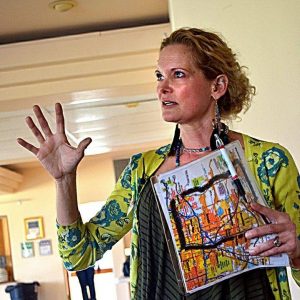
In 2016, Rocky Flats Downwinders gathered at the Colorado State Capitol to recognize National Downwinders Day and add the Rocky Flats community's voice to a much larger national history.
For communities across the United States, the word Downwinder carries a history that is both national and deeply personal. It describes people who lived downwind of nuclear weapons activities and were exposed—or potentially exposed—to radioactive materials released into the environment. For many families, recognition came only after years of illness, unanswered questions and efforts to understand what had happened in the communities where they lived.
National Downwinders Day, more formally recognized as a National Day of Remembrance for Downwinders, is observed on January 27. The date marks the beginning of nuclear weapons testing at the Nevada Proving Ground on January 27, 1951. In 2011, the U.S. Senate unanimously adopted a resolution designating January 27, 2012, as a national day of remembrance for Americans who lived and worked downwind of nuclear testing sites and were adversely affected by radiation from above-ground testing.
The Senate resolution offered a powerful acknowledgment: Downwinders “paid a high price” for the development of the nation's nuclear weapons program and deserved recognition for their sacrifice. For Rocky Flats Downwinders, that history has always resonated close to home.
Bringing Rocky Flats to the Capitol
Rocky Flats Downwinders was founded in 2015 by community members concerned about the experiences and illnesses being reported by people who had lived near the former Rocky Flats nuclear weapons plant. From the beginning, the organization's goals included community education, greater awareness among medical professionals, supportive services, medical monitoring and recognition of Rocky Flats Downwinders in federal radiation-exposure policy.
The following year, RFD marked National Downwinders Day at the Colorado State Capitol.
The gathering brought together people whose connections to Rocky Flats came from different directions—people who had grown up near the plant, researchers and writers documenting its history, and community advocates concerned about its continuing environmental and public-health legacy.
The speakers
Nick Hansen, co-founder of Rocky Flats Downwinders, grew up in Jefferson County during the 1970s and 1980s and helped establish the organization.
Kristen Iversen, Colorado native and author of Full Body Burden: Growing Up in the Nuclear Shadow of Rocky Flats, brought the perspective of someone who grew up near Rocky Flats and later documented the plant's history, secrecy and impact on surrounding communities.
Alesya Casse, a Rocky Flats community activist, had been involved in raising awareness about contamination concerns, including opposition to a proposed prescribed burn on the Rocky Flats National Wildlife Refuge.
Tiffany Hansen, co-founder of Rocky Flats Downwinders and founder of the Rocky Flats Resident Registry, spoke from her own experience growing up in the Quaker Acres neighborhood of Arvada near Rocky Flats.
Together, their participation reflected something that would become central to RFD's work: history, personal experience, environmental questions and public health cannot be understood in isolation from one another.
Watch the rally
The original Rocky Flats Downwinders website preserved video of the event so the community could hear directly from the people who participated.
Rocky Flats is part of the Downwinder story
National recognition of Downwinders historically centered primarily on people affected by atmospheric nuclear weapons testing. That distinction matters: Rocky Flats was not a nuclear weapons test site. It was a nuclear weapons production facility. But Rocky Flats was part of the same national nuclear weapons complex.
The plant manufactured plutonium components for nuclear weapons, and its history included fires, spills, waste-management practices and releases of radioactive and hazardous materials. The questions raised by surrounding communities are therefore different from those surrounding atmospheric testing—but the larger history of people living beyond the boundaries of nuclear weapons facilities connects them.
For RFD, identifying as Downwinders has meant asking that the experiences of communities surrounding nuclear weapons production facilities also be recognized.
Recognition is only part of the work
The 2016 Capitol gathering came early in the history of Rocky Flats Downwinders.
That same year, RFD and Metropolitan State University of Denver launched a community health survey focused on people who had lived in communities surrounding Rocky Flats. The project grew from RFD's outreach to local universities seeking help investigating health concerns reported by former residents.
The work continued in subsequent years through health advocacy, community stories, environmental research, public meetings and efforts to obtain medical monitoring and greater recognition for Rocky Flats Downwinders. That history makes the Capitol rally more than an old event in the RFD archive.
It captures an organization and a community beginning to find their public voice.
The meaning of National Downwinders Day today
National Downwinders Day is an opportunity to remember people whose lives became intertwined with America's nuclear weapons history without their necessarily knowing it at the time. It is also an opportunity to ask who has—and has not—yet been recognized.
The original Senate resolution specifically addressed Americans affected by above-ground nuclear weapons testing. Other communities have spent decades seeking recognition of their own histories.
Rocky Flats Downwinders believes the people who lived around nuclear weapons production facilities deserve a place in that conversation as well. Recognition alone cannot answer questions about an individual's illness. It cannot reconstruct every historical exposure or resolve every scientific uncertainty. But recognition does something important.
It acknowledges that America's nuclear history did not end at the fence lines of the facilities where nuclear weapons were tested or produced.
The people who lived downwind are part of that history, too.
Watch the Full National Downwinders Day Rally


Comments