_edited.jpg)
The Grieving Landscape — Bunk History
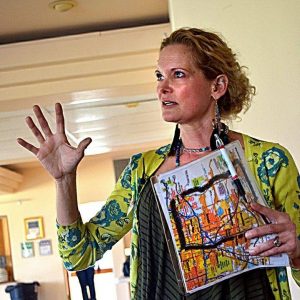
In a powerful 2020 essay, author Heidi Hutner examines Rocky Flats through the experiences of families, researchers, and community advocates—including Rocky Flats Downwinders founder Tiffany Hansen.
What happens when a place known for its beautiful landscapes and thriving communities has a history that many of its residents never fully understood? That question is at the heart of The Grieving Landscape, an essay by Dr. Heidi Hutner published in Longreads on June 30, 2020, and featured by Bunk History. The essay is excerpted from Doom With a View: Historical and Cultural Contexts of the Rocky Flats Nuclear Weapons Plant, an anthology edited by Kristen Iversen with E. Warren Perry and Shannon Perry.
Through deeply personal stories, Hutner explores the contrast between Colorado's scenic Front Range and the history of nuclear weapons production, radioactive contamination, and unanswered community health questions surrounding Rocky Flats.
A Personal Journey Into Nuclear History
Hutner begins with her own family's experience with cancer, including her diagnosis of Hodgkin's lymphoma. Her interest in nuclear history deepened when she learned that her mother had participated in Women Strike for Peace, a grassroots movement that challenged atmospheric nuclear weapons testing during the Cold War.
That discovery led Hutner to investigate the experiences of communities living near nuclear weapons facilities and other sites associated with radioactive contamination. Her research eventually brought her to Colorado, where she connected with author Kristen Iversen, whose book Full Body Burden documented growing up near Rocky Flats. Together with Hutner's daughter, Olivia, they toured communities surrounding the former nuclear weapons plant.
Seeing Rocky Flats Through a Different Lens
The essay describes their journey through the area surrounding Rocky Flats, including Indiana Street, Standley Lake, Arvada, and the newer Candelas development. Hutner describes the beautiful mountain scenery, neighborhoods, parks, and recreational opportunities that make Colorado such a desirable place to live.
But she also recounts conversations about the site's history, documented environmental contamination, and concerns expressed by residents and researchers. At Candelas, Hutner describes visiting a model-home sales office and listening to a presentation about the community's schools, recreation facilities, and nearby natural areas. She reports that the salesperson did not discuss the history of Rocky Flats during that visit.
That encounter raises one of the essay's central questions: How much do people know about the history of the places where they choose to live? The essay reflects Hutner's personal observations and the concerns of people she interviewed. Those accounts are important community testimony, although they do not independently establish the current exposure or health risk associated with any particular property.
Tiffany Hansen and the Beginning of Rocky Flats Downwinders
One of the most meaningful portions of the essay for our organization is Hutner's conversation with Tiffany Hansen. Tiffany describes growing up less than four miles from Rocky Flats, remembering the plant's lights visible from her childhood bedroom.
Like many children growing up in surrounding communities, she did not understand the nature of the facility or the materials being handled there.
Years later, after experiencing health problems and learning more about Rocky Flats, Tiffany began contacting former neighbors and friends. She encountered other families with serious health concerns, including cancer diagnoses, and began asking questions about the long-term health experiences of people who had lived near the plant. Those conversations helped inspire the creation of Rocky Flats Downwinders. Hutner's essay documents this early community organizing and describes Tiffany's efforts to bring residents together, support health surveys, and explore environmental research. The experiences reported by these families do not, by themselves, establish that Rocky Flats caused their illnesses. But they help explain why residents began calling for more research and greater public awareness.
The People Behind the Health Questions
The article also introduces readers to other community members, including Elizabeth Panzer and her family. Panzer discusses her son's rare cancer diagnosis and the questions it raised about the family's environment. Hutner describes how Panzer and other parents became increasingly involved in efforts to learn more about Rocky Flats and encourage additional investigation. These stories illustrate an important distinction.
Personal experiences cannot substitute for scientific studies. But scientific studies and public-health decisions should not overlook the experiences of the people whose lives they are intended to understand. For Rocky Flats Downwinders, collecting and preserving community stories has always been part of making sure these experiences remain visible.
A History That Extends Beyond the Plant
The essay also places Rocky Flats within a larger national history. Hutner connects the Colorado story to nuclear weapons production, atmospheric testing, and communities around other facilities associated with the Cold War nuclear weapons program. She examines the historical role of women and families in questioning official assurances and demanding greater attention to environmental health. At Rocky Flats, those concerns have continued beyond the end of nuclear weapons production in 1989 and the accelerated cleanup completed in 2005.
The former plant site now includes the Rocky Flats National Wildlife Refuge and a central area that remains under Department of Energy management and long-term stewardship.
Questions about historical contamination, nearby development, public understanding, and community health remain part of the conversation.
Why This Article Matters Today
The Grieving Landscape is not an epidemiological study or a technical environmental assessment. It is a personal essay that brings forward the voices and perspectives of people who have lived with questions about Rocky Flats. Its value lies partly in documenting what community members were experiencing, saying, and doing at the time of publication.
For Rocky Flats Downwinders, it is also a historical account of the organization's early advocacy and the people who helped make those efforts possible.
The essay reminds us that the history of Rocky Flats is not limited to the buildings, government records, or environmental measurements associated with the site.
It also includes families, former residents, workers, researchers, and community members trying to understand what that history means for their lives.
The story didn't end when the plant closed.
Read the Original Essay
We encourage readers to explore Heidi Hutner's complete essay, including her firsthand observations, conversations with community members, and reflections on the history of Rocky Flats.
The Grieving Landscape By Dr. Heidi Hutner Published June 30, 2020, in Longreads Excerpted from Doom With a View, Fulcrum Publishing, 2020.


Comments