_edited.jpg)
Dr. Carl Johnson: The Public Health Official Who Challenged Rocky Flats
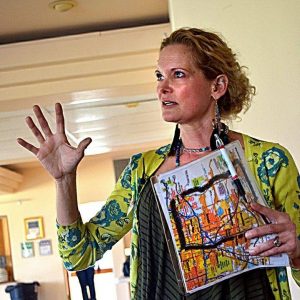
Cancer, plutonium contamination and the professional consequences of questioning Rocky Flats
Long before the 1989 FBI raid brought national attention to environmental problems at Rocky Flats, a Jefferson County public health physician was publicly asking whether contamination from the nuclear weapons plant was affecting the people living around it. His name was Dr. Carl J. Johnson.
Johnson served as Jefferson County's public health director beginning in 1973. From that position, he investigated radioactive contamination around Rocky Flats and became one of the most prominent public-health officials to challenge assurances about the plant's safety.
His work eventually cost him his position—or, as Johnson argued in court, he was pushed out because of it.
More than four decades later, his story remains remarkably relevant to the questions Rocky Flats Downwinders continues to ask about cancer, environmental exposure, development and the responsibility of public-health agencies to investigate uncertain risks.
A county health director begins asking questions
Johnson did not arrive in Jefferson County as an anti-nuclear activist. He was a physician and public-health official responsible for protecting the health of a county that contained one of the country's major nuclear weapons facilities.
His concerns grew as he investigated environmental conditions around Rocky Flats.
According to the Denver Public Library's biographical history, Johnson collected soil samples around the plant after learning of radioactive contamination in animals near Rocky Flats. His investigations reported radioactive contamination outside the facility and raised concerns about birth defects, cancer and the health of Rocky Flats workers and surrounding communities.
The Colorado Supreme Court would later describe some of his conclusions as “quite alarming.”
The cancer study that became part of the Rocky Flats debate
Johnson's best-known Rocky Flats research examined cancer incidence in relation to measured plutonium contamination. He used cancer-diagnosis data from the National Cancer Institute's Third National Cancer Survey for 1969–1971 and divided the Denver metropolitan area into geographic zones based on plutonium concentrations found in soil samples collected around Rocky Flats.
Johnson reported that overall cancer incidence in the area with the greatest measured plutonium contamination was approximately 24% higher among males and 10% higher among females than in the comparison area with the lowest contamination. Intermediate areas showed smaller elevations.Johnson reported excesses involving several types of cancer and concluded that the pattern supported his hypothesis that exposure to plutonium and other radionuclides could be affecting cancer incidence. That conclusion immediately became controversial.
What Johnson's study did—and did not prove
Nearly half a century later, Johnson's findings should neither be dismissed nor presented as definitive proof that Rocky Flats caused cancers throughout surrounding communities.
His was an ecological geographic analysis using cancer data from 1969–1971 and environmental measurements to define exposure areas. It was not a longitudinal study following individual Rocky Flats Downwinders and reconstructing their personal exposure histories. Later researchers disputed his interpretation.
A federal court considering Rocky Flats-related evidence in the 1980s heard criticism that the cancer pattern Johnson reported was biologically implausible given latency and the types of cancers involved. Other analyses also reached different conclusions about whether elevated cancer incidence attributable to Rocky Flats could be demonstrated. But Johnson's study remains historically important.
Even CDPHE's own review of Rocky Flats health research acknowledges that Johnson's 1981 study used National Cancer Institute diagnosis data and plutonium soil measurements and “found increases in many cancer types for persons in exposed areas, as compared with those for unexposed areas.” That makes Johnson's work part of the scientific history that should be examined—not erased from it.
Johnson's concerns went beyond cancer
Cancer was only part of Johnson's concern. He investigated radioactive contamination in soil, questioned official estimates of plutonium releases and opposed residential development in areas he believed presented unresolved environmental-health risks. That placed a county public-health official directly in the middle of questions involving public health, federal nuclear policy, land development and property values.
By the late 1970s, those tensions were becoming increasingly difficult to separate.
The Denver Public Library's history notes that Johnson's opposition to development near Rocky Flats brought him into conflict with development and governmental interests.
And then came 1981.
What happened to Dr. Johnson?
The shorthand version of the story is often: Carl Johnson investigated Rocky Flats, found elevated cancer rates and was fired. The historical record is more complicated—and more revealing. Johnson's employment ended in 1981 after the Jefferson County Board of Health accepted what the litigation described as his resignation under circumstances Johnson characterized as a constructive discharge.
Johnson maintained that concerns about his Rocky Flats research were the real reason he was forced out. The Board had another explanation. Health Department employees testified about problems they perceived with Johnson's management and leadership, and some Board members cited those concerns in supporting his removal. But there was also substantial evidence supporting Johnson's contention that Rocky Flats played a role.
According to the Colorado Supreme Court's account, Johnson testified that Board chairman Otto Bebber told him members were insisting on his removal because of his Rocky Flats studies.
Former board member Fredric Jacobus testified that criticisms of Johnson's administration were:
“mere smokescreens”
for an attack on Johnson's legitimate public-health work, particularly his Rocky Flats investigations. Board member Marcia Walsh, who opposed accepting Johnson's resignation, testified that Johnson was terminated “because of his studies of Rocky Flats.” The court record also documents Johnson's allegation that his research threatened property values and development potential around Rocky Flats. Those details make it difficult to separate Johnson's removal from the controversy his Rocky Flats work had created—even though the courts did not simply rule that retaliation was conclusively the sole reason he lost his position.
Johnson fought back
Johnson sued the Jefferson County Board of Health. His case eventually reached the Colorado Supreme Court. The case is particularly important to understanding Johnson's later reputation as a whistleblower. The Supreme Court did not simply order Jefferson County to give Johnson his job back. But it found that the lower court had failed to apply the appropriate constitutional standards when considering Johnson's claim that he had been retaliated against for speech protected by the First Amendment.The Colorado Supreme Court therefore vacated the judgment and sent the case back for further proceedings. Johnson's attorneys today describe the litigation as establishing protections for a whistleblower health director who exposed radiation concerns at Rocky Flats.
A reputation that changed with time
Johnson never returned to his Jefferson County health-director position. But he didn't stop researching radiation and public health. In 1984, the Journal of the American Medical Association published his research examining cancer incidence in an area of radioactive fallout downwind of the Nevada Test Site. He continued speaking publicly about Rocky Flats almost until his death. Johnson died on December 29, 1988—just months before FBI and EPA agents raided Rocky Flats in June 1989 as part of an investigation into environmental violations at the facility. The timing is striking. Johnson did not live to see Rocky Flats cease plutonium production or the federal investigation that transformed public understanding of what had occurred at the plant.
Why Carl Johnson still matters
Johnson's story is not important because every conclusion he reached must automatically be accepted today. Science does not work that way. His work should be evaluated alongside its methodology, limitations, subsequent research and competing interpretations. But Johnson asked questions that remain strikingly familiar: Where did contamination from Rocky Flats travel? Were people living in more contaminated areas experiencing different health outcomes? Should development occur where radioactive contamination had been detected?
Were government agencies adequately investigating possible health effects? And what happens when a public-health official's conclusions conflict with powerful governmental, economic and development interests?
Those questions did not disappear when Carl Johnson lost his job. More than forty years later, Rocky Flats Downwinders is still asking some of them. Johnson's history also provides an important lesson for today's discussion about CDPHE cancer-registry analyses. His 1981 study was not the definitive epidemiological study of Rocky Flats Downwinders that the community still needs. But it was an early attempt to connect environmental contamination data with patterns of disease. The appropriate response to uncertainty is not to pretend that uncertainty doesn't exist. It is to investigate it.
Remembering Dr. Carl Johnson
Carl Johnson died before the FBI raid, before Rocky Flats stopped producing nuclear weapons components, before cleanup, before the Wildlife Refuge and before today's communities expanded across the landscape surrounding the former plant. But he understood something fundamental about public health: When evidence raises a credible question about environmental exposure, asking difficult questions is part of the job.
For Rocky Flats Downwinders, remembering Dr. Carl Johnson means remembering his findings, the controversy surrounding his work, and the professional consequences he faced for insisting that possible health effects around Rocky Flats deserved investigation. His conclusions can continue to be debated.
His questions should not be forgotten.
Sources & Further Reading
Colorado Supreme Court — Johnson v. Jefferson County Board of Health (1983)
This is probably the most important link in the article. The actual court decision documents Johnson's claim that his removal was retaliation for protected speech concerning his Rocky Flats work, the Board's competing explanations, testimony concerning his Rocky Flats studies, and the Supreme Court's decision to vacate and remand the case for application of the proper constitutional standards.
Denver Public Library — Dr. Carl J. Johnson (1929–1988)
An excellent accessible biography for readers who want the larger story. It covers his education, appointment as Jefferson County public health director, Rocky Flats investigations, opposition to development near contaminated areas, removal from the Health Department and later work.
Carl Johnson's 1981 cancer study
The original study to cite is: Carl J. Johnson, Cancer Incidence in an Area Contaminated with Radionuclides Near a Nuclear Installation, published in Ambio in 1981. The later DOE-funded reanalysis specifically identifies Johnson's 1981 study, its use of cancer incidence data and plutonium soil-concentration contours, and its reported cancer findings.
Crump, Ng & Cuddihy — later analysis of Johnson's findings
This 1987 American Journal of Epidemiology paper is important because it presents a scientific challenge to Johnson's interpretation rather than allowing the RFD article to show only one side of the research history. The authors analyzed both the 1969–71 data and later 1979–81 data and concluded that the evidence did not support an association between Rocky Flats and cancer incidence.
Carl Johnson's response to that analysis
Johnson subsequently responded in the American Journal of Epidemiology in 1987. Including his response alongside the Crump paper lets readers see that this was an active scientific dispute rather than presenting either paper as the final word.
U.S. Department of Energy — Rocky Flats history
DOE's historical publication provides another perspective on Rocky Flats and specifically records that Johnson's report suggesting higher cancer incidence near Rocky Flats contributed to public concern. Because DOE operated within the federal Rocky Flats system, it is useful to include its historical account alongside Johnson's material.



Comments