_edited.jpg)
Looking Again at the Studies: Randy Stafford’s Review of Rocky Flats Health and Contamination Research
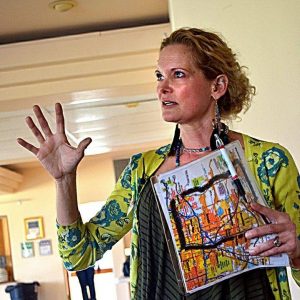
A citizen researcher spent months comparing decades of Rocky Flats studies. His conclusion was not that the science had settled the debate—but that important contradictions in the evidence and the way it has been interpreted deserve closer examination.
For decades, government agencies, scientists, public-health officials and community members have studied contamination and possible health effects associated with Rocky Flats.
But those studies have not always reached the same conclusions. In 2017, Colorado resident Randy Stafford joined the Jefferson Parkway Advisory Committee, a citizens advisory group established by the Jefferson Parkway Public Highway Authority. Stafford holds a bachelor's degree in applied mathematics and has spent his professional career in enterprise software. He is not an epidemiologist or health physicist, a distinction that is important when understanding his work. What Stafford did bring to the committee was a willingness to dig deeply into the existing record. He spent months reviewing studies of plutonium in soil around Rocky Flats and epidemiological studies examining cancer incidence in surrounding communities. He synthesized that work into a 26-page position paper for the advisory committee. In 2019, CBS Colorado reported on the paper and Stafford's concerns about proposed construction of the Jefferson Parkway along the eastern edge of the former Rocky Flats site.
What did Stafford find?
Stafford's central concern was not simply that plutonium had been detected around Rocky Flats. He questioned how the existing body of evidence was being used to reach conclusions about public-health risk. In his review, Stafford compared historical soil studies, government risk assessments and epidemiological studies. CBS reported in 2019 that Stafford said he had identified 10 studies spanning roughly 50 years that documented plutonium contamination around the proposed parkway area.
His concerns extended beyond contamination measurements to the health research itself.
Stafford argued that studies examining cancer incidence around Rocky Flats had produced conflicting results and that differences in methodology—particularly the geographic areas chosen for comparison—could influence what researchers found. That distinction became one of the central themes of his later work.
When studies reach different conclusions
Stafford continued examining the Rocky Flats health literature after completing his original position paper. In a 2024 submission to the Colorado State Board of Health, he wrote that there had been six epidemiological studies examining cancer incidence around Rocky Flats and focused particular attention on how those studies defined the populations being compared. He contrasted earlier research by former Jefferson County health director Dr. Carl Johnson with subsequent government-sponsored studies. Stafford's interpretation is that the independent studies with more geographically focused comparison areas found elevated cancer incidence closer to Rocky Flats, while studies he characterizes as methodologically weaker or government-sponsored generally did not. That is Stafford's assessment of the literature, not a settled scientific conclusion. Government health agencies have reached different conclusions about what the available epidemiological evidence demonstrates.
But the disagreement itself is important. If researchers select different geographic boundaries, time periods, populations or disease categories, they can be asking meaningfully different questions—even when each project is described broadly as a "Rocky Flats health study." That makes understanding study design essential when evaluating claims that research has either found—or failed to find—a health effect.
Five discrepancies Stafford says deserve another look
By 2024, Stafford had organized his concerns into five larger issues in a written submission to the Colorado State Board of Health:
Differences in plutonium soil standards and how those standards were established.
Disagreement about acceptable radiation dose limits for plutonium.
Modeled cancer-risk estimates versus health observations in surrounding communities.
Contradictory epidemiological findings and the absence of ongoing health monitoring.
Differences among government agencies in how the risks of remaining plutonium contamination are characterized.
Those questions broaden Stafford's work beyond the original Jefferson Parkway debate.
They ask something more fundamental: How confident should the public be when different methods, standards and studies produce different pictures of risk?
Models versus what happens in a community
Stafford has also questioned reliance on RESRAD, a computer model used in radiological risk assessment. In his State Board of Health submission, he compared modeled estimates of excess cancer risk with reports of rare cancers and other illnesses in communities near Rocky Flats. He argued that observations in those communities raise questions about whether modeling adequately captures real-world exposure and health outcomes. This requires an important distinction. Reports of unusual illnesses in a neighborhood can identify a question worth investigating, but they do not by themselves establish that Rocky Flats contamination caused those illnesses. Determining whether a true disease cluster exists—and whether an environmental exposure contributed to it—requires appropriately designed epidemiological research. For Rocky Flats Downwinders, that distinction is central: community experience can identify questions that deserve investigation without being presented as proof of causation.
The question of health monitoring
Perhaps one of Stafford's most consequential observations concerns what has not been done.
Stafford argues that there has never been a sustained health-monitoring program specifically following people living downwind and near Rocky Flats. In his 2024 submission, he cited Dr. Carl Johnson's earlier recommendation that additional research be conducted into cancer and other health effects among populations living near nuclear installations. Stafford argues that monitoring actual health outcomes over time would provide information that retrospective dose reconstruction and modeling cannot. That concern now intersects directly with one of Rocky Flats Downwinders' continuing priorities: independent health research and medical monitoring for communities surrounding Rocky Flats.
From a 26-page paper to the State Board of Health
Stafford's original work did not end with the Jefferson Parkway Advisory Committee.
His research later contributed to his chapter in Kristen Iversen's Doom With a View, and in November 2024 he joined five other contributors in submitting Concerns About the Public Health Risks of Rocky Flats Contamination to the Colorado State Board of Health. The submission brought together Stafford, former Jefferson County Public Health director Dr. Mark Johnson, analytical chemist Dr. Michael Ketterer, RN and public-health professional Shaunessy Kieng, retired FBI agent Jon Lipsky and biomedical scientist Dr. Deborah Segaloff.
Stafford's chapter, "Risk Management Discrepancies at Rocky Flats," developed many of the questions he had been pursuing since his work on the Jefferson Parkway committee.
Why Stafford's work matters
You do not have to accept every conclusion Stafford reaches to recognize the value of the question underlying his work: Have the different Rocky Flats studies actually been asking the same questions? When one study finds an association and another does not, simply saying "studies have been done" doesn't resolve the disagreement. We need to understand who conducted the research, what population was studied, which years were examined, how exposure was estimated, how comparison populations were selected, which health outcomes were measured, and what limitations the researchers themselves identified.
For Rocky Flats Downwinders, the answer should not be to choose whichever study supports a preferred conclusion. The better response is to ask for independent, well-designed research capable of addressing the weaknesses and unanswered questions identified in earlier work. More than 50 years of studies have produced an enormous amount of information about Rocky Flats. Stafford's work raises a different question:
Have we studied the right things, in the right populations, in the right way—and do we know enough to stop asking?
For the communities that lived around Rocky Flats, that question remains important.
Sources & Further Reading
Randy Stafford’s 26-page review — CBS Colorado, March 31, 2019This is probably the most important external link for the article. CBS interviewed Stafford about his work on the Jefferson Parkway Advisory Committee and reported that he spent months reviewing publicly available studies before preparing the 26-page paper concerning plutonium contamination near the proposed parkway. Man Submits 26-Page Paper on Plutonium Contamination Near Proposed Jefferson Parkway — CBS Colorado
Randy Stafford’s response to the Broomfield City Council, June 25, 2019Rocky Flats Right to Know has preserved Stafford's letter responding to presentations made during Broomfield's Jefferson Parkway study session. This is useful because readers can see Stafford making his arguments in his own words rather than through a news report. Randy Stafford's Response to the Broomfield Study Session
Elevated plutonium detected during Jefferson Parkway sampling — CBS Colorado, August 2019This gives readers important context for why Stafford's concerns about the Indiana Street corridor received renewed attention. A soil sample produced an elevated plutonium result, although another portion of the same sample produced a much lower result. Elevated Plutonium Detected in Jefferson Parkway Soil Sample — CBS Colorado
Competing interpretations of the plutonium finding — CBS Colorado, August 20, 2019I particularly like including this one because it demonstrates that there were—and remain—different interpretations of what the Rocky Flats evidence means. CBS interviewed Stafford alongside former physics professor David Wood, who reached a substantially different assessment of the risk. Rocky Flats Findings Divide Coloradans — CBS Colorado
More recent Rocky Flats environmental research — CBS Colorado, June 2024This connects Stafford's earlier questions about airborne plutonium and soil disturbance to more recent work by analytical chemist Michael Ketterer and former FBI agent Jon Lipsky. Ketterer reported detecting Rocky Flats-derived plutonium in airborne material collected during a high-wind event and called for further study; DOE and EPA maintained that previous work supported recreational use and residential development around the site's periphery. Watchdog Groups Send New Information to Judge in Rocky Flats Development Fight — CBS Colorado
Concerns About the Public Health Risks of Rocky Flats Contamination — Colorado State Board of Health submission, November 20, 2024This should be the other major source. Stafford is one of six contributors, and his chapter is titled “Risk Management Discrepancies at Rocky Flats.” He identifies five areas he believes deserve further examination, including soil standards, radiation-dose limits, risk modeling, epidemiological findings and differences in government assessments of remaining plutonium.



Comments