Nearly a Decade Ago, Rocky Flats Downwinders Was Already Asking the Questions Behind Truth & Transparency
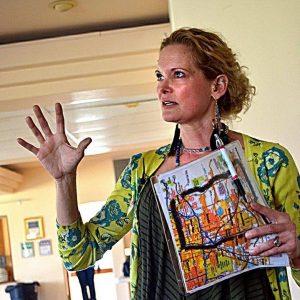
In a 2017 Denverite article, RFD co-founder Nicholas Hansen challenged the methodology of Colorado's cancer registry studies. His concerns about former residents, cancer latency, and the limitations of the state's conclusions remain central to our Truth and Transparency project today.
The concerns were there from the beginning
On January 5, 2017, Denverite reporter Andrew Kenney published an article about a newly released Colorado Department of Public Health and Environment (CDPHE) cancer study involving communities surrounding Rocky Flats. The headline described the state's finding that there was no overall increase in cancer incidence near the former nuclear weapons plant—but it also acknowledged that important questions remained.
Among the people questioning the study was Nicholas (Nick) Hansen, an attorney and co-founder of Rocky Flats Downwinders. Nick's concerns went to the heart of the study's methodology. He questioned whether examining cancer diagnoses among people living near Rocky Flats at the time of diagnosis could adequately represent the health experiences of those who had lived near the plant during its decades of operation. People move. Families relocate. Children grow up and leave their hometowns. Cancer may develop years or decades after a possible environmental exposure.
What happens to the health histories of those people when a study primarily examines where individuals live when they are diagnosed? It was a question Nick was asking nearly a decade ago. It is still one of the central questions behind Rocky Flats Downwinders' Truth and Transparency project.
What did the 2017 CDPHE study find?
CDPHE examined cancer incidence from 1990 through 2014 in ten geographic areas surrounding Rocky Flats, comparing the results with the remainder of metropolitan Denver.
The study used information from the Colorado Central Cancer Registry. Its overall finding was that the incidence of all cancers combined was not statistically different from the comparison population. However, the analysis also identified elevated incidence of certain cancers in particular geographic areas, including lung, colorectal, esophageal, and prostate cancers.
The state considered other potential explanations for those findings, including smoking, alcohol consumption, and differences in cancer screening.
Those considerations are relevant to interpreting cancer statistics. But a finding of no overall increase in all cancers combined is not the same as finding no elevations in individual cancers. Nor does it establish whether historical exposure to Rocky Flats contaminants caused or contributed to disease among people who lived nearby. That distinction was central to the questions raised in Denverite's reporting.
Nick Hansen identified the missing population
Nick focused on a problem that is especially important when investigating diseases that may develop long after an environmental exposure. The state's analysis did not reconstruct the complete residential histories of everyone who lived near Rocky Flats during its operating years. Instead, the cancer registry data primarily reflected where people lived when they were diagnosed. That creates two different problems.
First, someone who lived near Rocky Flats during its operating years could move away and develop cancer decades later. Their diagnosis might never be associated with their former neighborhood in a Colorado geographic cancer registry analysis. Second, someone could move into a nearby community many years after major historical releases and subsequently be diagnosed with cancer. That person's diagnosis could be counted within the geographic study area, even though their residential exposure history was entirely different.
Nick understood that these population changes could affect what the study was capable of finding. For an area such as Arvada, Westminster, Broomfield, and surrounding communities—which experienced substantial residential development over decades—this was not a minor detail. It was fundamental to defining the population whose health the study was intended to investigate.
If the scientific question concerns people who lived near Rocky Flats during relevant exposure periods, or even after cleanup since residual contamination remains, the research needs a way to identify and study those people—even after they move away.
CDPHE acknowledged the limitation
One of the most important aspects of the 2017 Denverite article is that Nick's concern was not simply dismissed as a disagreement between community advocates and the state.
Mike Van Dyke, then CDPHE's chief of environmental epidemiology, acknowledged that the cancer registry analysis could not conclusively determine whether exposure to Rocky Flats emissions caused cancer. He explained that stronger conclusions would require better individual exposure information and greater consideration of people moving into and out of the study area. He also described the analysis as a preliminary, hypothesis-generating investigation that could help determine whether a more comprehensive and costly epidemiological study was justified. That acknowledgment matters.
It establishes that CDPHE recognized a distinction between examining cancer incidence in geographic populations and determining the effects of historical exposure among individuals.
The state had not conclusively answered the question many Downwinders were asking.
Nick called for a different kind of study
Nick believed the limitations of the registry analysis justified additional investigation. He called for a controlled, meaningful study capable of examining the experiences of people who had actually lived near Rocky Flats. That call was rooted in what Rocky Flats Downwinders was hearing from community members. Families were contacting the organization about cancers and other serious illnesses. Some had moved out of Colorado years earlier. Their stories did not establish that Rocky Flats caused their illnesses. But neither could a geographic cancer registry analysis determine whether their historical exposures contributed to those diagnoses.
Nick's position was that those questions deserved an investigation designed to address them.
Rather than accept the absence of an overall statistical signal as the final answer, he wanted the state to examine a more directly relevant population.
The warning was already in writing in 2016
The Denverite article was not the first time Nick raised these concerns. On November 21, 2016, he sent a letter to CDPHE on behalf of Rocky Flats Downwinders. The letter questioned continued reliance on older cancer registry findings and emphasized that cancer can develop decades after a potentially relevant exposure. Nick specifically identified the problem of using geographic cancer registry data that could exclude people who moved away before receiving a cancer diagnosis.
He urged Colorado to help reach former residents wherever they now lived and to support a properly designed study of people who had lived near Rocky Flats during its operating years.
The letter also raised the need for health monitoring and the potential relevance of federal radiation-exposure compensation. These concerns anticipated several of the issues RFD is addressing today.
The organization was asking the state to study the people who had actually been there—not simply those who happened to live nearby years later. The original 2016 letter remains an important part of RFD's organizational history and should be preserved alongside the 2017 Denverite reporting.
The difference between finding no overall elevation and answering the exposure question
A cancer registry is a valuable public-health resource. It records diagnosed cancers and allows researchers to examine incidence patterns across populations and time periods.
But the usefulness of an analysis depends on whether the available information and study design are appropriate for the question being asked. For Rocky Flats, the relevant historical questions include where people lived during plant operations, when they lived there, how long they remained, what exposures may have occurred, and whether they developed illnesses later in life.
A geographic comparison of cancer incidence cannot reconstruct all of those histories.
It can identify particular patterns among defined populations. It cannot, by itself, determine the long-term health outcomes of everyone who may have experienced historical exposure.
The difference is not evidence that CDPHE's data are wrong. It is evidence that the conclusions communicated to the public must remain within the limits of what the research actually examined. That was the essence of Nick Hansen's concern in 2017.
A question that has become even more important
Years later, Rocky Flats Downwinders received correspondence from CDPHE representative Kieu Vu stating that the department had monitored cancer incidence rates near Rocky Flats since the 1980s and had not found elevated cancer rates among nearby residents. That characterization raises questions when compared with the more qualified explanations reported in 2017.
The earlier analysis had identified some elevated cancer rates in specific geographic areas, even though the overall combined cancer incidence was not elevated. And CDPHE's own epidemiologist acknowledged that the methodology could not conclusively determine whether historical Rocky Flats exposures caused cancer. For RFD, the concern is not simply that different agency representatives used different wording. It is that the more general statement may leave readers with a substantially different understanding of what the research established. Saying that CDPHE has monitored cancer incidence in geographic areas is not the same as saying the state has followed the long-term health of people who lived near Rocky Flats during relevant historical exposure periods. Similarly, saying that no overall increase was found does not mean that no individual cancer categories showed elevated incidence.
These distinctions should be clearly explained whenever CDPHE communicates its findings to the public.
The foundation of Truth and Transparency
Our Truth and Transparency project builds on questions Rocky Flats Downwinders has raised since its early years. The project seeks to improve public understanding of the research conducted near Rocky Flats and encourage accurate, complete explanations of what the evidence can—and cannot—tell us. The issues Nick raised in 2016 and 2017 remain central to that work:
Who was studied? Were the people who lived near Rocky Flats during historically relevant periods included, or were the findings based primarily on geographic populations at diagnosis?
What could the study detect? Were its methods sufficiently sensitive to investigate the specific cancer patterns and potential exposure relationships being questioned?
What did the results actually show? Were elevated findings for individual cancer types clearly distinguished from the overall finding for all cancers combined?
What remained unanswered? Did public explanations adequately acknowledge the absence of individual exposure histories and long-term follow-up?
What research should come next? Would an independent, multidisciplinary review help establish whether additional, better-targeted health studies are feasible and warranted?
These questions do not assume that Rocky Flats caused any particular illness.
They do not require researchers to reach a predetermined conclusion.
They call for scientific methods appropriate to the questions being investigated and public communications that accurately represent the results and limitations.
The people behind the numbers
For Nick and the other founders of Rocky Flats Downwinders, this was never only a discussion about statistical methodology. It was also about the families reaching out to the organization. People who had grown up near Rocky Flats. Former residents living in other states. Families trying to understand unusual patterns of illness among relatives and former neighbors. Their experiences deserved to be heard, documented, and considered when determining what further investigation might be necessary.
Personal accounts are not substitutes for population-based epidemiological research.
But they can help identify questions that existing research has not answered. That is why RFD has continued to collect community experiences while advocating for better research.
The two efforts serve different but complementary purposes.
Nearly ten years later, the questions remain
When Denverite published its article in January 2017, Rocky Flats Downwinders was already challenging whether the state's approach could adequately investigate the health of the people who lived near Rocky Flats. Nick Hansen had identified the central methodological concern. CDPHE had acknowledged important limitations. And families were continuing to ask questions that the available research could not conclusively answer. Almost a decade later, those issues remain at the heart of Truth and Transparency. We are not starting this conversation today. We are continuing a conversation that our founders began years ago.
The question Nick raised then remains the question we are asking now: Have we actually studied the long-term health of the people who lived near Rocky Flats?
For Rocky Flats Downwinders, Truth and Transparency means making sure that question is not lost behind a reassuring headline or an overly broad summary of limited research. It means asking for clear methods, honest explanations, and the opportunity to examine the evidence. And it means remembering the people whose experiences gave rise to these questions in the first place.
Read the Original Reporting and Correspondence
Andrew Kenney — Denverite, January 5, 2017
Nicholas P. Hansen — November 21, 2016
Related RFD articles


