_edited.jpg)
What Happened Here? Wes McKinley’s Fight to Mark the History of Rocky Flats
Updated: 4 days ago

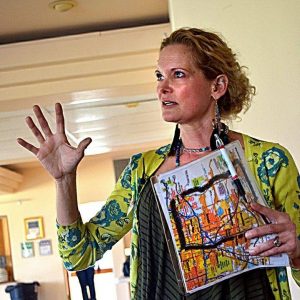
After the Rocky Flats nuclear weapons plant disappeared from the landscape, former grand jury foreman and Colorado legislator Wes McKinley fought for something seemingly simple: signs telling visitors what had happened there.
Drive past Rocky Flats today and the landscape can be deceptive. The industrial complex that once dominated the site is gone. Hundreds of buildings were demolished during cleanup. Much of the former federal property became the Rocky Flats National Wildlife Refuge, where grasslands stretch toward the foothills and visitors can hike, bicycle and watch wildlife. For someone unfamiliar with Colorado history, there is little about the landscape itself that reveals what once happened there.
For decades, that troubled Wes McKinley. McKinley was not simply another critic of Rocky Flats. He had served as foreman of the federal special grand jury convened after the 1989 FBI and EPA raid of the nuclear weapons plant. Years later, after becoming a Colorado state representative, he brought the question of Rocky Flats history to the state Capitol: What should people entering this landscape be told about what happened here?
From grand jury foreman to state legislator
McKinley's connection to Rocky Flats began with the investigation that followed the June 1989 federal raid. The grand jury spent years examining evidence concerning environmental practices at the plant. McKinley later became one of the most persistent voices arguing that the public had never received the full story of what investigators found. When Rocky Flats was being cleaned up and most of the property was headed toward conversion into a national wildlife refuge, McKinley saw another problem emerging. The buildings were disappearing. So were many of the visible reminders of the site's history.
McKinley began pushing legislation requiring visitors to be explicitly informed that the refuge had once been part of a nuclear weapons production facility where radioactive and hazardous materials had been used and released. Contemporary reporting shows that he introduced signage legislation more than once.
What McKinley wanted visitors to know
McKinley's proposed signs weren't intended simply to say that Rocky Flats had once been a government facility. He wanted specificity. Reporting at the time quoted his proposed language as identifying Rocky Flats as a "nuclear weapons" plant where radioactive and hazardous materials had been "used and released." His proposal also called for informational material explaining that radioactive and hazardous materials had been buried, burned and sprayed on the site during plant operations. In other words, McKinley wanted visitors to understand both parts of the site's history: This was a nuclear weapons plant. And contamination occurred here. The proposal was controversial.
Information or warning?
The signage debate revealed a larger disagreement over what the former Rocky Flats site had become. Some people, including McKinley, believed visitors should receive an explicit warning about the site's history and residual contamination before deciding whether to enter.
Others argued that such warning language would inaccurately imply that the completed cleanup had left the refuge unsafe for its intended use. The Rocky Flats Stewardship Council supported interpretive signage but opposed warning-style language. In a 2006 letter discussing McKinley's legislation, the council said signs should inform, but argued that warnings would send the wrong message if regulators certified the cleanup as meeting applicable standards. That distinction—interpretation versus warning—would remain at the heart of the Rocky Flats signage debate for years.
The museum that never became part of the site
There were also plans to preserve Rocky Flats history in a more substantial way. After cleanup, proposals contemplated a visitor center and museum where people could learn about the site's Cold War mission, workers, environmental history, cleanup and transformation into a refuge. Those plans did not result in an on-site museum.
A 2009 High Country News examination of efforts to preserve Rocky Flats history described an uncertain future for commemoration: perhaps a museum, a warning sign, a highway placard—or something else. It noted that funding shortages had prevented development of visitor facilities at the refuge.
A separate Rocky Flats Cold War Museum organization worked to preserve artifacts, photographs, worker histories and other records. Its stated mission was to document the historical, social, environmental and scientific aspects of Rocky Flats. But it was not the permanent interpretive museum at the former plant site that had once been envisioned.
Historian Jon Wiener later described the former Rocky Flats landscape starkly: despite nearly four decades of plutonium production and a remarkable Cold War history, the site had no official museum, tours or historical marker at the time he wrote about it.
“What happened here?”
Eventually, an agreement appeared to resolve at least part of the signage question.
According to Westword, language approved in 2007 for interpretive signs at public-access points was supposed to begin with a remarkably simple question: “What happened here?”
The proposed information discussed plutonium, hazardous materials, waste handling and residual contamination. But when the refuge prepared to open to the public in September 2018, the signs visitors encountered had changed. Instead, the entrance welcomed people to Rocky Flats National Wildlife Refuge and emphasized its hundreds of wildlife and plant species.
According to Westword, terminology including “plutonium,” “hazardous materials,” “waste-handling” and “dangerous” had disappeared from the version installed at one trailhead, as had a section addressing residual contamination. The sign instead told visitors that recreational exposure would be much lower than that from a medical X-ray and described the refuge as safe for recreation, workers and wildlife. The disagreement McKinley had raised years earlier had never really gone away.
Was the purpose of a Rocky Flats sign to welcome people to a wildlife refuge—or to make sure they understood what existed there before it became one?
Those goals do not necessarily have to conflict. But at Rocky Flats, they repeatedly did.
When the physical evidence disappears
There is a larger reason this matters. At many historic places, the site itself helps preserve memory. A factory remains standing. A battlefield has monuments. A mine has its headframe. An old military base retains buildings, equipment or interpretive exhibits. Rocky Flats is different. Most of the industrial infrastructure was intentionally demolished during cleanup.
The plutonium-processing buildings disappeared. The stacks disappeared. The security infrastructure largely disappeared. Even the landscape of the former industrial area changed dramatically. What remained looked increasingly like open Colorado prairie.
Artist and son of a Rocky Flats worker Jeff Gipe later described returning to Arvada and being struck by how thoroughly the plant seemed to have disappeared from the surrounding community's consciousness. The old east entrance and its identifying sign were gone; what visitors saw instead were signs identifying a wildlife refuge. That concern ultimately helped inspire Gipe's Cold War Horse memorial. McKinley had recognized the same problem earlier.
Once the buildings were gone, history would have to be deliberately preserved—or it could become invisible.
The signage story continued after McKinley
McKinley's bills did not settle the question. The refuge eventually opened in 2018, and debates over trails, contamination, historical interpretation and warnings continued.
Remarkably, they are continuing today. In January 2026, Boulder County and Westminster reached agreement on new warning signs for approaches to the Rocky Flats refuge. The signs explicitly tell trail users about the former nuclear-weapons plant and potential exposure to radioactive materials. Supporters had pressed for stronger language, while public agencies and other stakeholders debated how the risks should be characterized.
More than twenty years after McKinley began pushing his legislation, Colorado was still debating essentially the same question: What does the public have a right to know before entering Rocky Flats?
A place can be both things
Perhaps the most useful way to understand Rocky Flats today is not to force the landscape into a single identity. It is a wildlife refuge. The open space supports wildlife, native plants and important Front Range habitat. It is also part of the former Rocky Flats nuclear weapons production site, where plutonium components for the nation's nuclear arsenal were manufactured for decades, where major fires and environmental releases occurred, and where contamination required a multibillion-dollar federal cleanup.
One history does not erase the other. A sign can acknowledge both.
Why this matters to Rocky Flats Downwinders
For Rocky Flats Downwinders, preserving this history is not simply about placing a warning beside a trail. It is about public memory. People moving into surrounding communities today may have no memory of Rocky Flats as an operating plant. Children growing up nearby were born decades after it closed. Someone driving past open prairie and a wildlife-refuge sign could reasonably have no idea that a major nuclear weapons production facility once occupied the landscape. That is exactly why history needs interpretation. Wes McKinley understood that once Rocky Flats was demolished, the greatest threat to its history might not be another locked file or secret document. It might simply be forgetting.
A museum was envisioned but never became a permanent interpretive presence at the former plant. The industrial buildings are gone. The landscape has changed. And the fight over signs lasted for decades and still continues today. McKinley's question therefore remains relevant long after his legislative efforts ended: When people arrive at Rocky Flats, shouldn't they know what happened here?
Sources & Further Reading
The 2009 High Country News feature is particularly useful for understanding McKinley's signage campaign and the broader struggle over how Rocky Flats should be remembered.
The Rocky Flats Stewardship Council's 2006 letter is valuable because it documents the opposing perspective: support for historical interpretation, but opposition to warning-style signage.
Westword's reporting documents both McKinley's earlier legislative effort and the later controversy over the wording used when the refuge opened.
And the 2026 Colorado Sun story provides an excellent ending to the historical arc: the signage question McKinley raised more than two decades earlier is still being negotiated today.


Comments