_edited.jpg)
Broomfield Backs RECA Expansion—and Recognition for Rocky Flats Downwinders
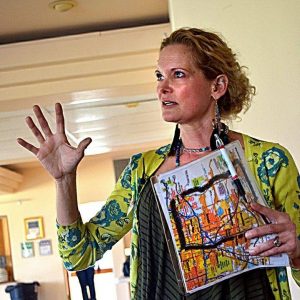
Resolution 2026-115 adds an important local voice to the effort to expand the Radiation Exposure Compensation Act as Congress considers H.R. 10115, legislation that could bring federal recognition and assistance to communities surrounding Rocky Flats.
For people who lived near Rocky Flats, one of the longest-running questions has been remarkably simple: Will the federal government ever recognize the communities that lived around the plant as radiation-exposed communities? A new resolution from the City and County of Broomfield brings that question directly into the current national debate over the Radiation Exposure Compensation Act, or RECA. Broomfield's Resolution 2026-115 supports RECA and the effort to extend federal recognition to people affected by the nation's nuclear weapons program. That local support is especially significant now.
On August 17, 2026, a bipartisan group of members of Congress introduced H.R. 10115, the Radiation Exposure Compensation Reauthorization Act of 2026. The legislation would expand RECA in several ways—including provisions specifically affecting communities surrounding Rocky Flats. For Rocky Flats Downwinders, Broomfield's resolution represents something we have sought for years: recognition from a community that lived with Rocky Flats in its backyard.
Why Broomfield's voice matters
Broomfield's relationship with Rocky Flats isn't theoretical. The city lies immediately east of the former nuclear weapons plant and has dealt with Rocky Flats-related environmental concerns for decades. Broomfield's own Hazard Mitigation Plan documents that radioactive materials were released during the 1957 and 1969 Rocky Flats fires, that tritium was detected in Broomfield's drinking-water supply in 1973, and that after the 1989 FBI and EPA raid, Broomfield constructed a diversion ditch around Great Western Reservoir to prevent runoff from Rocky Flats from entering the reservoir. The city eventually replaced Great Western as a drinking-water source. Those facts give Broomfield a distinctive voice in the RECA discussion.
This isn't one community commenting on something that happened somewhere else.
Rocky Flats is part of Broomfield's own environmental and public-health history.
What is RECA?
Congress created the Radiation Exposure Compensation Act in 1990 to provide compensation to certain people who developed specified diseases after particular forms of radiation exposure connected to the nation's nuclear weapons program. Over the years, Congress has expanded the program. But eligibility has always depended heavily on where a person lived, where they worked, what kind of exposure they experienced and whether their illness falls within an eligible category. That has left many radiation-affected communities outside the program. Rocky Flats Downwinders are among them. People who lived around the Rocky Flats nuclear weapons plant have historically not been recognized as a covered downwinder population under RECA simply because they lived near Rocky Flats.
H.R. 10115 could change that.
What H.R. 10115 would do for Rocky Flats communities
The Radiation Exposure Compensation Reauthorization Act of 2026 was introduced on August 17 by Delegate James Moylan of Guam with a bipartisan group of original cosponsors that includes Colorado Representatives Brittany Pettersen and Joe Neguse. The bill was referred to the House Judiciary and Energy and Commerce committees. For Colorado, the legislation is particularly consequential. Representative Pettersen's office says H.R. 10115 would recognize Rocky Flats and the Cotter Uranium Mill near Cañon City as Manhattan Project waste sites and designate Colorado as a downwind state for purposes of exposure associated with atmospheric nuclear testing. The legislation also proposes broader changes to RECA, including increased compensation and reimbursement of documented out-of-pocket medical expenses for qualifying claimants. For Rocky Flats communities, however, the most fundamental change may be something less tangible: federal recognition.
Recognition matters
For decades, people who lived around Rocky Flats have reported cancers and other illnesses and asked whether environmental releases from the plant may have played a role. Those personal experiences are real. But they are not, by themselves, scientific proof that Rocky Flats caused an individual's illness. That distinction is important to Rocky Flats Downwinders.
We have consistently called for better research precisely because so many questions remain unanswered. RECA works differently from an individual toxic-exposure lawsuit. Congress establishes categories of eligible people, locations, exposures and diseases so that qualifying claimants do not have to individually reconstruct decades-old radiation exposure and prove medical causation in court. Including Rocky Flats communities would therefore represent a major shift in how the federal government treats the people who lived around the plant.
It would say, in effect: Your exposure history deserves federal recognition.
Why a local resolution can matter in Washington
Broomfield's resolution does not enact H.R. 10115. Only Congress can do that.
But local resolutions can demonstrate something important to members of Congress considering federal legislation: the communities most directly connected to the issue support action. That matters particularly while H.R. 10115 is still early in the legislative process. As of September 2026, the bill has been introduced and referred to the House Judiciary and Energy and Commerce committees; it has not yet passed either chamber of Congress.
Support from Broomfield therefore arrives at a useful moment. It tells Colorado's congressional delegation—and lawmakers across the country—that RECA expansion isn't simply an abstract national policy question. It matters to a Colorado community that has spent decades managing the legacy of Rocky Flats.
Broomfield has been dealing with Rocky Flats for generations
There is another reason this resolution carries weight. Broomfield didn't discover Rocky Flats in 2026. Its history includes decades of decisions made because the nuclear weapons plant existed immediately to its west. Its own planning documents acknowledge plutonium concentrations above background in some soils near Great Western Reservoir, while also noting that EPA determined those levels did not require additional remediation and released those areas for unrestricted use. Broomfield continues to participate in post-closure monitoring intended to ensure contaminants remaining at the former Rocky Flats site do not migrate off-site. That history makes the resolution more than symbolic. A local government that has spent decades responding to the environmental legacy of Rocky Flats is now asking the federal government to recognize people affected by the broader nuclear weapons program.
A larger coalition is forming
Broomfield's action also points toward what may be necessary for H.R. 10115 to advance.
Rocky Flats Downwinders cannot do this alone. Neither can one congressional representative.
The bill itself already reflects a broader coalition. Its original sponsors and cosponsors came from Colorado, Guam, Missouri, New Mexico, Nevada, Arizona and Illinois, and additional members have since joined. The affected communities differ, but many share a similar history: participation in or proximity to America's nuclear weapons program followed by decades of efforts to obtain recognition. That is why municipal resolutions can become important pieces of a larger effort. Broomfield can support the legislation. Other communities surrounding Rocky Flats can consider doing the same. Colorado organizations can speak. Health professionals and researchers can contribute evidence. And residents can tell elected officials why recognition matters to their families.
This is an important step—not the finish line
Rocky Flats Downwinders welcomes Broomfield's support. But a resolution is not compensation, medical care or a health study. And introduction of H.R. 10115 does not mean the bill has become law. There is still a legislative process ahead. For RFD, the goal remains larger than any single bill. We continue to advocate for recognition, meaningful medical monitoring, better independent health research, and support for people whose lives may have been affected by Rocky Flats. RECA could become an important part of that effort.
Broomfield's Resolution 2026-115 adds another voice to it. And that voice comes from a community with a long history of living beside Rocky Flats.
For decades, Rocky Flats communities have asked to be recognized. Broomfield's resolution says that question deserves an answer. Now the decision moves to Congress.


Comments