_edited.jpg)
Individual stories cannot answer every question about Rocky Flats. But together, they help us understand the community behind those questions.
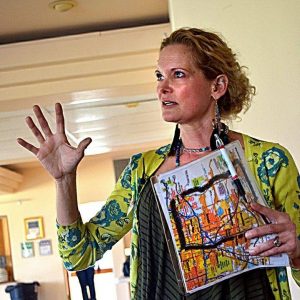

For years, people have contacted Rocky Flats Downwinders with stories about their health, their families and their connections to communities surrounding Rocky Flats. Some grew up in Arvada, Westminster, Broomfield and other nearby communities. Some remember swimming or waterskiing at Standley Lake, playing outside, gardening, riding horses or simply growing up within sight of the plant. Others worked at Rocky Flats or had parents and relatives who did.
And many have contacted us because of what happened later. They have told us about cancer, thyroid disease, autoimmune conditions and other serious health problems. Some families have experienced multiple illnesses across generations. Some people were diagnosed unusually young. Others have lived for years with unanswered questions about whether the place where they grew up could have played any role in what happened to them.
These stories are an important part of the history of Rocky Flats.
Ten stories. Ten families. Many different experiences.
As part of the new Rocky Flats Downwinders website, our CONNECT section will initially feature ten community stories. They are not intended to represent every Downwinder, and their experiences are not all the same.
Amber M. writes about her mother, a lifelong Downwinder who developed serious autoimmune illnesses, and about her own later health problems. She is careful not to claim that Rocky Flats caused their illnesses. What she wants is acknowledgment, research and transparency.
Stephanie D. describes a family in which all five immediate family members developed thyroid nodules and autoimmune conditions, alongside cancers and other serious illnesses affecting several members of the family. Her family lived in Arvada from the late 1970s into the early 1990s and spent summer weekends at Standley Lake.
Michelle H. remembers an idyllic childhood east of Lake Arbor and Far Horizons. Her father later developed advanced stomach cancer and her mother was diagnosed with multiple myeloma. Her story connects those illnesses with memories of a family that spent years living, playing and digging in the soil of their neighborhood.
Shaunessy K. tells the story of her father, who developed cardiac angiosarcoma, a rare cancer of the heart, and died at 56. Her search for answers took on new significance when the family learned of another person living only blocks away who had been diagnosed with the same rare cancer.
Crystal G. grew up in west Arvada and later worked near Rocky Flats. Decades later, she was diagnosed with acute myeloid leukemia. Her account tells not only of diagnosis and treatment, but of the bone marrow transplant she received from her son and the long road that followed.
Joseph D. grew up with his siblings near 82nd and Indiana in Arvada. All three siblings later developed cancers before age 50. His story is particularly important because he does not claim medicine can prove a single environmental cause. Instead, he asks whether families with histories like his deserve better documentation, medical surveillance and answers.
Other stories describe young breast cancers, brain tumors, thyroid cancer, the experiences of people who worked at Rocky Flats, and families who have spent decades wondering whether illnesses affecting several relatives could have some connection to where they lived.
What connects these stories isn't a single diagnosis or a single conclusion.
It is a community asking to be seen.
Personal stories are not a cancer study
Rocky Flats Downwinders believes it is important to make a distinction between what people have experienced and what scientific research can establish. A collection of personal health stories cannot tell us how common a disease is in the larger population. It cannot establish that Rocky Flats caused an individual's cancer or illness. And people who choose to contact RFD are not a scientifically selected sample of everyone who ever lived near the facility.
But that doesn't make their experiences unimportant.
Community reports can identify questions that deserve investigation. They can reveal experiences that aren't visible in statistics alone. They can help researchers, journalists, policymakers and other residents understand what people are actually asking when they talk about the health legacy of Rocky Flats. Most importantly, they preserve the experiences of people who were there.
Behind every data point is a person
Public-health reports necessarily reduce human experience to numbers: diagnoses, age groups, geographic areas, rates and statistical comparisons. Those tools are essential.
But a cancer registry cannot tell you what it was like for a daughter to watch her father become ill. It cannot describe a mother wondering why several of her children developed serious diseases. It doesn't record the childhood memories of swimming at Standley Lake or looking toward Rocky Flats from a backyard. And it cannot capture what it feels like to discover, years later, that other families from the same community have been asking similar questions.
That is something stories can do. For some people, sharing their experience is also simply a way of saying: We were here. This happened to our family. Please don't forget us.
This collection will continue to grow
The ten stories appearing at the launch of CONNECT are only the beginning.
Rocky Flats Downwinders has already heard from many more people than we can feature in the initial collection. Some have shared detailed family histories. Others have sent just a few sentences: where they lived, what happened to them or someone they loved, and why they believe their experience should be documented.
As the website develops, we plan to make it possible for people to submit their own Downwinder stories directly through the Rocky Flats Downwinders website.
People will be able to tell us about their connection to the area, their family's experience, health concerns if they choose to share them, and what they want others to understand about living in a community connected to Rocky Flats. Not every story has to be about illness.
We also want to hear what it was like to grow up here. Where did you live? What did you know about Rocky Flats at the time? Did someone in your family work there? What do you remember about your neighborhood, school or community? When did you first learn about contamination from the plant? How has that knowledge affected the way you understand your own history? Together, those accounts can create something that no single study, government report or historical document can provide: a community record, told by the people who lived it.
Share your story
If Rocky Flats is part of your family's history, your experience belongs in this larger community story. You may have experienced serious illness. You may be perfectly healthy. You may have worked at Rocky Flats, grown up nearby, raised children here, attended a nearby school, recreated in the area or only recently discovered that your childhood home was close to the former plant. We want the new Rocky Flats Downwinders website to help people understand not only what happened at Rocky Flats, but who the Rocky Flats community includes. Our stories are one way we can do that.
Educate. Advocate. Connect.


Comments