_edited.jpg)
The Metro State–RFD Health Survey: Promising Findings, Important Limitations and an Unfinished Study
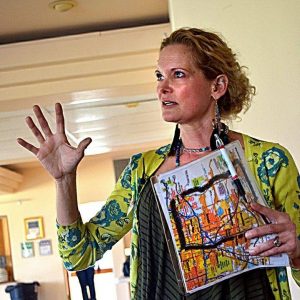
In 2016, Metropolitan State University of Denver partnered with Rocky Flats Downwinders to begin something the community had requested for decades: an effort to document the health experiences of people who had lived near the former Rocky Flats nuclear weapons plant.
The project drew an extraordinary response. Within months, 1,745 surveys had been collected, illnesses had been mapped, preliminary patterns had attracted widespread media attention, and researchers had outlined several important next steps.
Then the project stopped.
No final epidemiological analysis or peer-reviewed report was published. The survey closed after its principal investigator retired, leaving a valuable collection of community health information largely unanalyzed.
A community-driven effort begins
The Rocky Flats Downwinders Health Survey launched on May 16, 2016, under the direction of Carol Jensen, a professor in Metropolitan State University’s Integrative Health Care program. The survey invited participation from people who had lived within a broad area east and southeast of Rocky Flats between 1952 and 1992. Its original boundaries extended from Highway 128/120th Avenue on the north to Interstate 70 on the south, and from Highway 93 on the west to Interstate 25 on the east.
The project used convenience sampling, meaning people voluntarily responded after learning about the survey. It was designed to collect residential histories, geographic information and self-reported illnesses from people who believed they might have lived downwind of Rocky Flats. The addresses and health reports were geoplotted. Researchers then overlaid the reported illnesses with historical maps depicting contamination and releases associated with Rocky Flats.
From the beginning, the survey represented an unusual collaboration between a public university and a community organization formed by people concerned about possible health effects from living near a former nuclear weapons facility.
What the preliminary results reported
The preliminary executive summary, released in November 2016, described 1,745 completed surveys covering residential and illness histories across a 64-year period.
Those surveys included 848 reported incidents of cancer. This number should be understood as reported cancer cases—not necessarily 848 different people—because an individual respondent could report more than one diagnosis.
Of the 848 reported cancers, the preliminary analysis classified 414 as rare cancers. That represented approximately 48.8% of the cancer reports in the survey.
The executive summary compared that percentage with published research estimating that rare cancers accounted for approximately 25% of cancers in the broader United States population. It defined a rare cancer as one occurring in fewer than 15 people per 100,000 per year.
The four most frequently reported cancers in the survey were:
Breast cancer
Thyroid cancer
Prostate cancer
Colon cancer
The prominence of thyroid cancer drew particular attention. At the time, thyroid cancer ranked much lower nationally than breast, prostate, lung and colon cancers, yet it was the second-most frequently reported cancer in the survey. The survey also documented reports of leukemia, lymphoma, multiple myeloma, sarcoma, brain cancer, pancreatic cancer, bile-duct cancer, bone cancer, ovarian cancer and numerous other uncommon diagnoses.
These patterns were concerning enough to warrant additional investigation. But the researchers were appropriately cautious. The executive summary characterized the results as “anecdotal, compelling, non-conclusive.”
What the preliminary findings did not prove
The survey did not establish that cancer rates were elevated in the full population surrounding Rocky Flats, and it did not prove that Rocky Flats caused any participant’s illness.
Several methodological limitations prevent that conclusion.
Participants selected themselves
This was not a randomly selected population sample. People with cancer, unusual illnesses or existing concerns about Rocky Flats may have been more likely to learn about and complete the survey. This creates self-selection bias.
The survey did not establish a population denominator
To calculate a cancer incidence rate, researchers need to know both the number of new diagnoses and the amount of time the underlying population was at risk. The survey collected reports from volunteers but did not identify every person who lived in the study area during the 64-year period. Without that denominator, the reported cases cannot be converted into a population cancer rate.
Cumulative reports were compared with annual rates
The preliminary report compared cancers accumulated over many decades with national statistics commonly expressed as annual cases per 100,000 people. Those measures are not directly equivalent. The comparison can identify questions worth studying, but it cannot establish that the survey population experienced twice the expected rate of rare cancer.
Diagnoses and residential histories required verification
The executive summary listed verification of addresses and time periods as a necessary next step. A stronger study would also confirm diagnoses through medical records or a cancer registry and determine whether multiple reported cancers came from the same respondent.
Important risk factors were not controlled
Cancer patterns are influenced by age, sex, smoking, occupation, family history, genetics, healthcare access, screening practices and other environmental exposures. The preliminary survey did not report an analysis adjusting for these potential confounding factors.
There was no unexposed comparison group
A rigorous epidemiological study would compare people with a documented history near Rocky Flats with a similar group that did not share that history. The Metro State survey did not include such a control population.
The maps did not reconstruct individual exposure
Mapping reported illnesses can reveal geographic patterns, but proximity alone does not establish an individual radiation dose. A more complete study would need verified residential timelines, historical release information, wind and water pathways, environmental measurements and—insofar as possible—individual exposure reconstruction. These limitations do not mean the reports should be dismissed. They mean the preliminary findings should have been treated as a starting point for better research rather than a final answer.
Media attention brings the findings to the public
The launch and preliminary results attracted substantial Colorado media coverage.
In May 2016, 5280 Magazine and 9NEWS covered the beginning of the project and the community’s effort to document the health experiences of people who had lived downwind of Rocky Flats. When preliminary findings were released in November, Denver7, CBS Colorado and 9NEWS reported on the unusual prominence of thyroid cancer and the large proportion of reported cancers classified as rare. Denver7 interviewed Professor Jensen, who emphasized that the findings were not definitive. She said the prominence of thyroid cancer and the proportion of rare cancers were unusual and deserved further investigation.
CBS Colorado similarly reported that the preliminary data were concerning while emphasizing the need for continued study.
The coverage gave many community members their first opportunity to see their experiences reflected publicly. It also reinforced the central message of the researchers: the results raised questions that required more rigorous investigation.
The study’s proposed next steps
The executive summary did not present the preliminary cancer findings as the conclusion of the project. It identified several next steps:
Verify participant addresses and residential timeframes
Continue collecting surveys
Examine illnesses other than cancer
Conduct oral histories with people reporting extremely rare cancers
Investigate geographic patterns more carefully
Explore soil sampling in areas where illness reports appeared to cluster
These steps could have helped transform a self-reported community survey into a foundation for a more rigorous research program.
That did not happen.
The sudden end of the Metro State project
According to Rocky Flats Downwinders’ account of the project, Professor Carol Jensen retired in 2018. No new Metro State faculty member was appointed to take over as principal investigator. RFD repeatedly requested that the university identify another qualified investigator so the data could continue to be examined. The project nevertheless closed, and the next steps listed in the preliminary report were not completed under the Metro State partnership. No final comprehensive report was released. The illnesses beyond cancer were not fully analyzed publicly, participant information was not fully verified, and the survey’s geographic patterns were not tested through a completed epidemiological study.
From the community’s perspective, the study did not end because its questions had been answered. It ended because the academic structure needed to continue the work disappeared when the principal investigator retired. Metro State has not, in the materials publicly available to RFD, provided a detailed public explanation of why another investigator was not appointed. For accuracy, the absence of a successor should not be interpreted as proof of political interference or an effort to suppress findings without supporting evidence. What can be documented is that the principal investigator retired, no replacement continued the project, the survey closed, and no final study was published.
Why the unfinished data still matter
The Metro State–RFD survey cannot establish cancer incidence or causation. But it captured something no previous project had assembled in the same way: 1,745 community-reported histories connecting illness, place and time near Rocky Flats.
That information may still be valuable for:
Developing testable research questions
Identifying diagnoses requiring closer examination
Designing a properly controlled epidemiological study
Comparing self-reports with cancer-registry data
Examining autoimmune, neurological, reproductive and other conditions
Identifying residents willing to participate in future research
Preserving community health histories that might otherwise be lost
Any renewed analysis would require appropriate university authorization, privacy safeguards, data-use agreements and research oversight. Researchers would also need to determine what the original consent language permits and whether participants must be contacted again.
An unfinished study is not a negative study
The Metro State survey is sometimes misunderstood in two opposite ways.
It should not be presented as scientific proof that Rocky Flats caused elevated disease rates. Its convenience sample and other limitations do not support that conclusion.
But it should not be described as a study that found nothing, either.
The preliminary analysis identified unusual patterns, attracted broad public attention and explicitly recommended further investigation. The project closed before that work could be completed. That distinction is essential: the study was unfinished—not negative.
RFD continues to call for independent research
Rocky Flats Downwinders continues to seek partnerships with epidemiologists, environmental-health researchers, universities and public-health institutions capable of conducting the next phase of this work. A future study should build on the community’s participation while improving the scientific design through:
Verified diagnosis and residential records
Clearly defined exposed and comparison populations
Age- and sex-adjusted incidence calculations
Analysis of latency and duration of residence
Evaluation of occupational and lifestyle risk factors
Cancer-registry linkage
Examination of non-cancer illnesses
Transparent methods and independent peer review
The 1,745 people who responded to the original survey entrusted researchers with their histories because they believed those experiences mattered.
Their participation should not be the end of the story. It should be the beginning of the rigorous, independent health research the Rocky Flats community has long requested.


Comments